
Beyond the Certificate: What Regional Care Providers Look for in Graduates
What regional disability and aged care providers look for in emerging support workers: practical confidence, respecting the home as sanctuary, ISBAR documentation standards, and placement support.
TTS editorial team ·
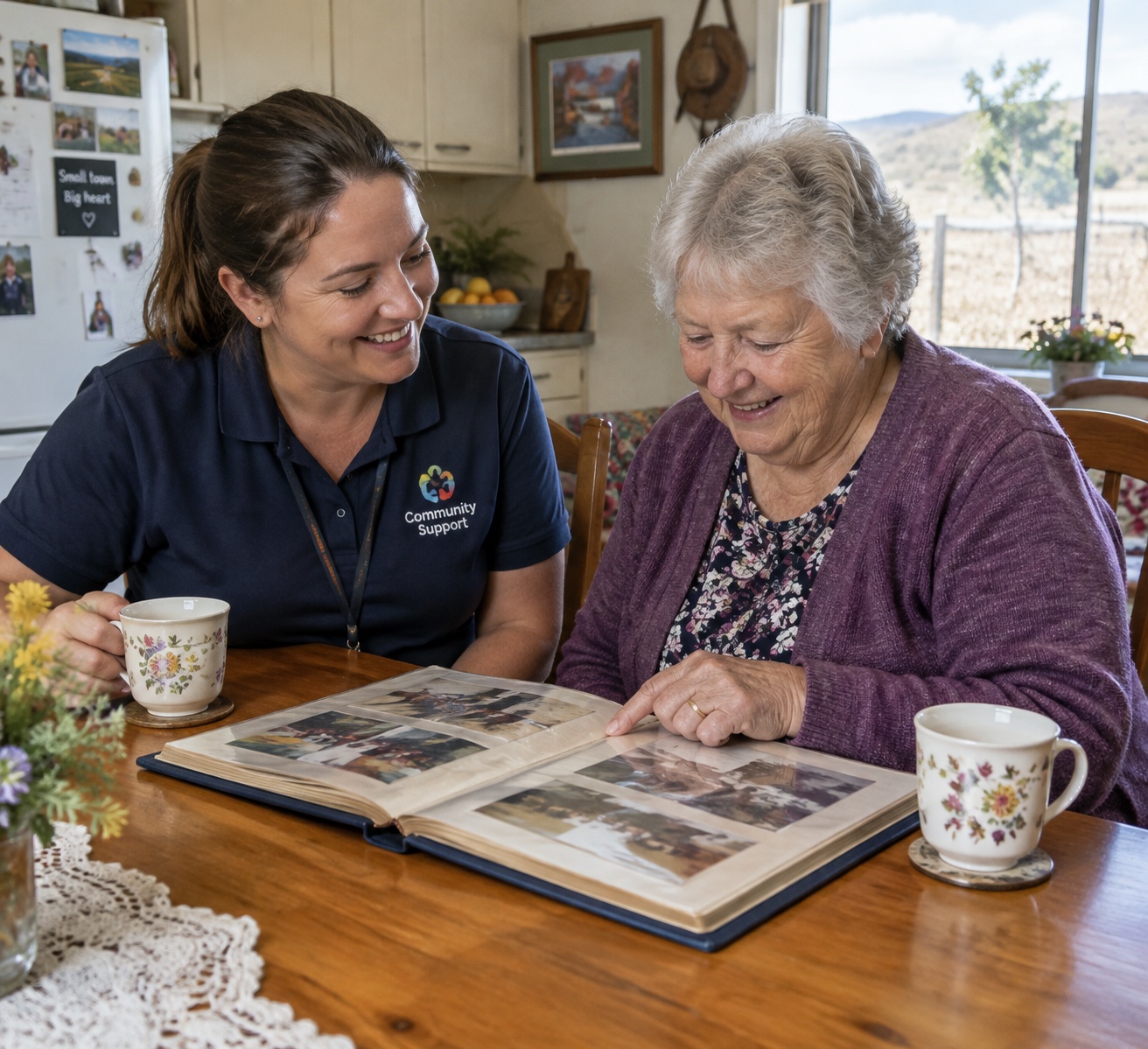
The baseline vs. genuine work readiness
Enrolling in Certificate III in Individual Support (CHC33021) is the essential gateway into care work. But providers such as Trefoil Care Services (TCS) look for something more: day-one work readiness in home and community environments, where support workers often work without a supervisor in the room.
1. Respecting the home as someone's sanctuary: the 3 selection criteria
The Director's and senior staff's lived experience of lapses in boundaries in their own families' care shapes what providers look for. A person's home is their sanctuary, and frontline staff are a guest in it.
Frontline staff are evaluated on three criteria: Active listening over assumptions — asking how a person likes things done rather than assuming; Maturity, patience and humility — staying calm, unhurried and open to direction from the person and their family; and Upholding personal dignity — protecting privacy, choice and respect in every task.
2. Navigating the real barriers in home and community environments
Homes are not purpose-built facilities. Narrow hallways, small domestic bathrooms and furniture layouts affect safe manual handling. Domestic realities such as pets, visitors and household routines need to be respected. And as a lone worker, the support worker is responsible for recognising risk, following procedures and escalating concerns promptly.
3. Professional documentation: ISBAR and the Victorian legal standard
"If it's not written down, it wasn't done." Records made in care settings may be relied on under Victorian law, including the Health Records Act 2001 and the Disability Act 2006, and Coroners Court findings have highlighted the importance of accurate, timely documentation.
The ISBAR framework — Identify, Situation, Background, Assessment, Recommendation — gives support workers a clear structure for handovers and for reporting changes in a person's condition.
4. Privacy, confidentiality and clear scope of practice
Privacy concerns how personal information is collected, used and stored; confidentiality concerns not disclosing what you learn about a person in the course of your work. Both matter in the home.
Scope of practice must be clear. Support workers assist with medication according to authorised GP medication orders, not vague GP direction given in the home.
5. Solving the host provider's placement decision: Cert III, Cert IV and specialised units
Certificate III in Individual Support (CHC33021), Certificate IV in Disability Support (CHC43121) and some specialised units require workplace performance evidence and workplace assessment. Host organisations weighing up a placement often worry about the supervisory workload.
TTS offers dedicated on-site placement supervision to host organisations, to help ease that workload while students complete their placement requirements. Placement arrangements are agreed with each host organisation.
6. Continuous compliance: the annual CPR and first aid standard
Minimum requirements are commonly HLTAID009 Provide cardiopulmonary resuscitation or HLTAID010 Provide basic emergency life support. Many employers prefer HLTAID011 Provide First Aid, with CPR (HLTAID009) updated yearly and first aid recertified every 3 years. Check your employer's requirements. For rural settings, read First Aid on the Land.
7. The TTS pathway: connecting training to frontline excellence
TTS connects accredited training with the practical expectations of regional care providers. Talk with TTS about which course and support suit you, or use the Course Adviser to explore your pathway.